
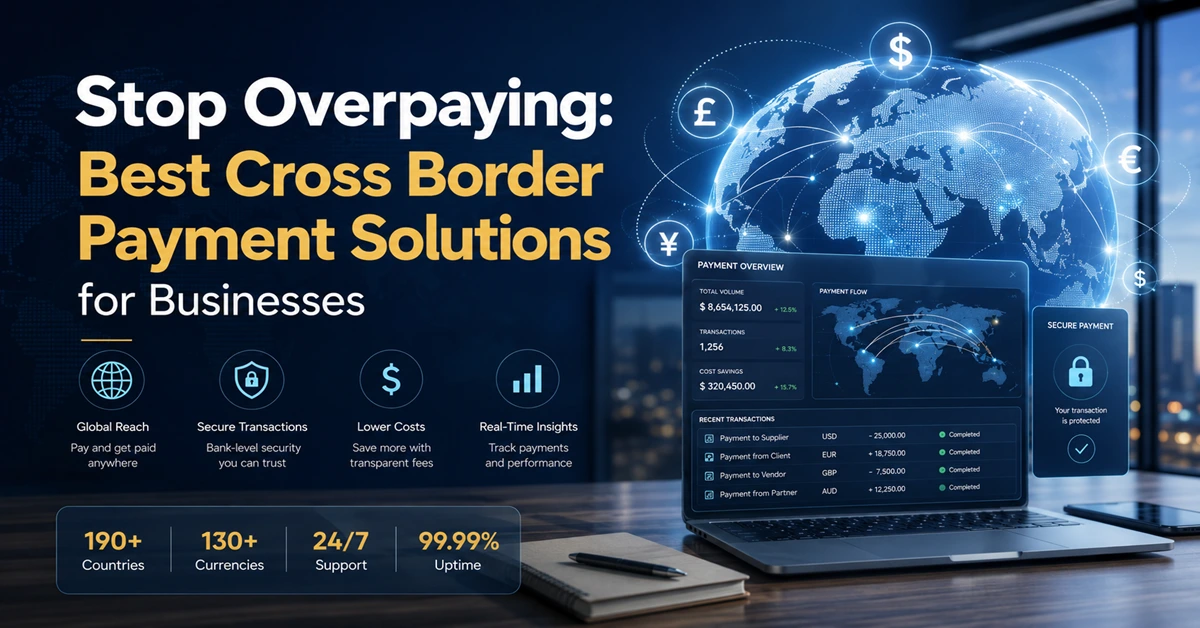
Global business is no longer reserved for giant corporations with offices in five countries and teams spread across continents. Today, even a small ecommerce store in Sydney, a SaaS startup in Dubai, or a freelancer agency in London can work with clients and suppliers worldwide. That sounds exciting, right? But there is one problem that still frustrates almost every business owner cross border payments. Sending and receiving money internationally has traditionally been expensive, painfully slow, and filled with hidden banking fees that eat into profits.
The good news is that fintech innovation is completely reshaping the global payments industry in 2026. Businesses now have access to faster payment rails, multi-currency wallets, real-time foreign exchange conversions, and digital banking platforms designed specifically for international trade. According to recent industry reports, fintech platforms such as Wise, Airwallex, and Payoneer are processing billions in international transactions annually while helping businesses reduce operational costs significantly. Wise alone processed nearly $243 billion in cross-border volume recently, reflecting the explosive demand for digital payment solutions.
Modern companies no longer want outdated wire transfers that take five business days and charge unpredictable fees. They want speed, transparency, automation, and scalability. Think about it like replacing an old diesel truck with a high-speed electric vehicle. Traditional banking still works, but fintech platforms move with far greater efficiency and flexibility. Businesses today are choosing solutions that integrate with accounting software, automate payouts, support dozens of currencies, and provide local receiving accounts worldwide.
Why Cross Border Payments Matter More Than Ever
The global economy has become deeply interconnected. Businesses are hiring remote employees, selling products internationally, outsourcing development teams, and partnering with suppliers from different continents. Cross-border transactions are no longer an occasional requirement; they are now part of daily operations for thousands of companies. As ecommerce, SaaS businesses, and online marketplaces continue expanding globally, international payments have evolved from a financial function into a strategic business necessity.
One major challenge companies face is the hidden cost structure inside traditional international banking systems. Many businesses still rely on SWIFT transfers, where intermediary banks take cuts during payment routing. A transfer that looks cheap upfront often becomes expensive after exchange rate markups, receiving fees, and compliance delays. This lack of transparency creates uncertainty in cash flow management, which is especially harmful for startups and small businesses operating with tight margins.
Fintech companies recognized this gap and built alternatives focused on transparency and efficiency. Community discussions among founders and entrepreneurs repeatedly highlight the same frustrations: slow settlement times, poor exchange rates, random compliance checks, and operational complexity. Businesses increasingly prefer fintech platforms because they simplify global transactions while reducing overhead costs.
Another reason cross-border payment solutions matter more today is the rise of remote work. A company based in one country might now pay developers in Eastern Europe, marketers in Southeast Asia, and customer support teams in South America. Without an efficient payment infrastructure, payroll becomes chaotic. Businesses need platforms capable of handling multiple currencies seamlessly while maintaining compliance across jurisdictions.
Top Cross Border Payment Solutions for Modern Businesses
The cross-border payment industry has become highly competitive in 2026, with several Fintech Companies leading innovation. Each platform targets different business needs, from small ecommerce sellers to enterprise-level international corporations. Choosing the right provider depends on transaction volume, supported countries, API capabilities, and currency management features.
Wise Business
Wise Business has become one of the most trusted names in international business payments. Businesses love Wise because it uses mid-market exchange rates with transparent pricing instead of hidden spreads. The platform supports local receiving accounts in multiple currencies, enabling businesses to receive payments like a local company in major global markets. Recent reports indicate that Wise serves millions of users globally and processes enormous transaction volumes every year.
One of Wise’s strongest advantages is simplicity. The interface feels clean and user-friendly, which matters for business owners who do not want to deal with complicated banking systems. Companies can hold funds in multiple currencies and convert them only when rates are favorable. This flexibility helps businesses save money on currency conversions while improving treasury management.
Airwallex
Airwallex is rapidly becoming a favorite among ecommerce businesses and SaaS companies. Unlike simple transfer tools, Airwallex offers a complete financial infrastructure with APIs, expense management, virtual cards, payment acceptance, and international payouts. The platform supports local collection accounts in many countries and enables businesses to operate globally without opening physical bank accounts abroad.
Airwallex stands out because it focuses heavily on automation and scalability. High-growth startups often choose Airwallex because the platform integrates directly into ecommerce stores and subscription billing systems. It feels less like a payment processor and more like a complete operating system for global finance.
Payoneer
Payoneer remains extremely popular among freelancers, marketplace sellers, and digital service providers. The company supports transactions across more than 190 countries and integrates with major marketplaces like Amazon, Fiverr, Upwork, and Airbnb. Payoneer’s multi-currency receiving accounts help businesses receive international payments without relying entirely on traditional banks.
The platform is especially useful for businesses operating in emerging markets where traditional international banking access may be limited. Many entrepreneurs use Payoneer as a bridge between global clients and local banking infrastructure.
Revolut Business, Stripe, and Thunes
Revolut Business continues gaining popularity because of its modern interface, team expense controls, and multi-currency accounts. Meanwhile, Stripe dominates online payment processing for SaaS and ecommerce businesses. Stripe’s global API infrastructure allows companies to accept payments from customers worldwide with minimal friction.
Thunes has emerged as a strong infrastructure provider focused on global payouts, especially in regions underserved by traditional banking networks. Industry analysts rank Thunes among the leading cross-border payment infrastructure providers because of its extensive coverage across emerging markets.
The Growing Importance of Multi-Currency Accounts
Imagine running an international business while constantly converting every incoming payment immediately into your local currency. You would lose money repeatedly through exchange fees and unfavorable conversion rates. That is why multi currency accounts have become essential for global businesses.
A multi-currency account allows businesses to hold, send, receive, and manage multiple currencies from a single dashboard. Instead of opening separate bank accounts in different countries, companies can operate globally through one centralized financial system. This flexibility dramatically improves operational efficiency.
Fintech platforms like Wise, Revolut Business, and Airwallex now position multi-currency accounts as core business infrastructure rather than optional features. Analysts increasingly describe these accounts as “essential infrastructure” for modern international trade.
Businesses operating internationally can strategically decide when to exchange currencies instead of accepting automatic conversions at poor rates. Think of it like storing fuel before prices rise. Timing currency conversions intelligently can save companies thousands of dollars annually.
How Fintech Companies Are Transforming Global Payments
Traditional banks built international payment systems decades ago. Those systems were not designed for instant ecommerce, remote teams, subscription businesses, or real-time digital commerce. Fintech companies entered the market with a completely different mindset build payment systems around internet-native businesses.
This transformation is happening rapidly. New fintech platforms use AI-powered routing systems that automatically choose the fastest and cheapest payment path. Some platforms bypass outdated correspondent banking networks entirely by using local settlement infrastructure. Businesses now experience faster settlements, lower costs, and better transparency compared to legacy banking systems.
Another major innovation is automation. Modern platforms integrate directly with accounting systems like Xero and QuickBooks, reducing manual reconciliation work. Businesses can automate supplier payments, payroll processing, invoice generation, and tax reporting from one interface. That level of operational efficiency was nearly impossible with traditional international banking.
Regulators are also adapting to the fintech revolution. Recent developments show central banks exploring new payment account models for fintech companies to improve access to payment infrastructure. This demonstrates how financial systems worldwide are evolving to support digital-first payment ecosystems.
The fintech industry is not just competing with banks anymore; it is redefining what businesses expect from financial services. Speed, transparency, and automation are becoming the new standard.
Choosing the Right Cross-Border Payment Platform
Selecting the best cross-border payment solution depends heavily on your business model. A freelancer earning international income may prioritize low fees and ease of use, while an ecommerce company processing thousands of monthly transactions might require APIs, automation, and advanced treasury tools.
Before choosing a provider, businesses should compare several critical features:
- Exchange rate transparency
- Supported countries and currencies
- Settlement speed
- API and software integrations
- Compliance and security standards
- Customer support quality
- Multi-currency account functionality
Businesses should also consider scalability. A platform that works perfectly for a startup may become limiting as transaction volumes increase. Many founders initially start with Wise or Payoneer and later migrate to more advanced platforms like Airwallex or Stripe as operations expand. Community discussions across fintech forums consistently reflect this growth pattern.
Security and compliance are equally important. International payments involve anti-money laundering regulations, KYC requirements, and local financial laws across multiple jurisdictions. Reliable providers invest heavily in fraud prevention and compliance infrastructure to ensure smooth operations for businesses.
Choosing the Right Cross-Border Payment Solutions for Your Business
Cross-border payments are no longer just about moving money from one country to another. They have become the backbone of global digital commerce. Businesses today need faster settlements, transparent fees, automation, and multi-currency flexibility to compete internationally. Traditional banking systems still play a role, but fintech companies are clearly leading the future of international business payments.
Platforms like Wise, Airwallex, Payoneer, Revolut Business, Stripe, and Thunes are helping businesses simplify international operations while reducing costs and improving efficiency. Multi-currency accounts are also becoming essential tools for modern companies that operate across borders.
As global commerce continues expanding, businesses that adopt smarter payment infrastructure will gain a significant competitive advantage. In a world where speed matters, outdated banking processes simply cannot keep up with the pace of modern business anymore.
FAQs about Cross-Border Payment Solutions:
Wise Business is often considered one of the best options for small businesses because of its transparent fees, competitive exchange rates, and simple interface.
Multi-currency accounts help businesses hold and manage different currencies without constantly converting funds, reducing exchange losses and improving cash flow management.
Most major fintech companies follow strict compliance standards, including AML and KYC regulations. Many also use advanced fraud detection and encryption technologies.
Airwallex and Stripe are excellent choices for ecommerce businesses due to their API integrations, automation tools, and international payment support.
Fintech companies often bypass traditional correspondent banking systems and use local payment rails, reducing intermediary fees and improving settlement speed.