
Safety at sea is about more than navigation, weather awareness, and vessel maintenance. Whether you own a leisure boat, operate a fishing vessel, manage a yacht, or run a commercial charter service, being prepared for medical emergencies is a vital part of responsible boating.
A properly stocked Category C First Aid Kit can provide immediate assistance when accidents happen onboard. Combined with reliable marine safety equipment and essential marine safety supplies, it forms a critical part of your vessel’s emergency preparedness plan.
From minor cuts and burns to more serious injuries, having the right medical supplies readily available can make a significant difference while waiting for professional assistance. For UK boat operators, investing in the right safety equipment is not only a practical decision but also an important step toward safer and more compliant operations.
In this guide, we’ll explore everything you need to know about the Category C First Aid Kit, its role in maritime safety, and how it fits within a complete onboard safety strategy.
Why a Category C First Aid Kit Matters at Sea
Medical emergencies can occur without warning. Even routine boating activities can result in injuries caused by slips, trips, sharp equipment, fishing gear, ropes, or changing weather conditions.
Unlike emergencies on land, access to immediate medical assistance may be limited when you’re on the water. This is why a Category C First Aid Kit remains an essential item for many UK boat operators.
The ability to provide immediate treatment can:
- Reduce the severity of injuries
- Improve comfort for the injured person
- Help prevent complications
- Support safer vessel operations
- Provide reassurance for crew and passengers
A well-maintained first aid kit helps ensure you’re prepared to respond quickly and effectively when every minute matters.
What Is a Category C First Aid Kit?
A Category C First Aid Kit is a marine medical kit designed for vessels operating close to shore and in situations where medical assistance can be reached within a reasonable timeframe.
Unlike standard household first aid kits, marine-specific kits are designed to withstand challenging onboard environments, including moisture, movement, and exposure to changing weather conditions.
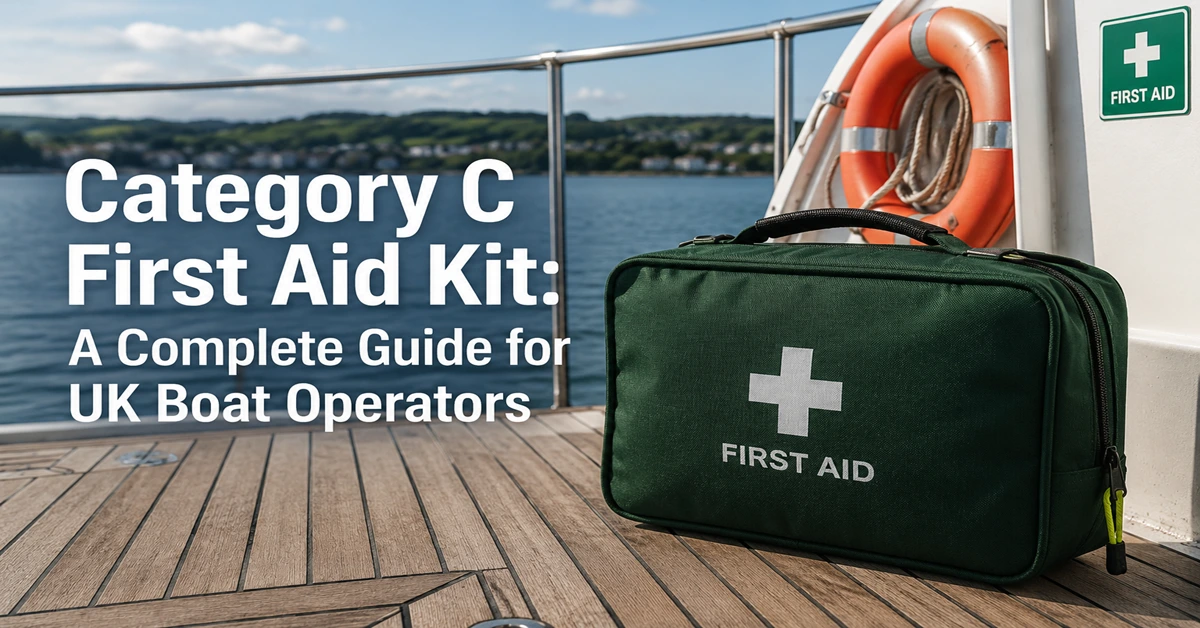
A typical Category C First Aid Kit is stored in a waterproof container and contains essential medical supplies needed to treat common onboard injuries and illnesses.
These kits play an important role in maintaining vessel safety and supporting emergency preparedness across a variety of marine operations.
Who Needs a Category C First Aid Kit in the UK?
A Category C First Aid Kit can benefit a wide range of marine users, including:
- Boat owners
- Yacht owners
- Sailors
- Fishing vessel operators
- Marine charter companies
- Marina operators
- Commercial marine businesses
- Water sports operators
Whether you’re operating a private vessel or managing commercial marine activities, having the appropriate medical supplies onboard contributes to a safer environment for everyone.
Essential Items Found in a Category C First Aid Kit
While exact contents may vary depending on the vessel and operational requirements, most Category C First Aid Kit solutions include supplies designed to manage common medical situations at sea.
Typical contents may include:
Wound Care Supplies
- Sterile dressings
- Adhesive plasters
- Sterile gauze
- Wound cleansing materials
Bandages and Support Items
- Triangular bandages
- Conforming bandages
- Safety pins
- Support dressings
Eye Care Products
- Sterile eye wash
- Eye dressings
- Protective eye pads
Personal Protection Equipment
- Disposable gloves
- Protective barriers
- Hygiene supplies
General First Aid Essentials
- Medical scissors
- First aid guidance materials
- Emergency treatment items
The goal of the Category C First Aid Kit is to provide practical treatment options for common injuries until further medical care becomes available.
How Category C First Aid Kits Support Marine Safety Equipment
A first aid kit should never be viewed as a standalone safety solution. Instead, it should form part of a broader collection of marine safety equipment carried onboard.
Essential marine safety equipment may include:
- Lifejackets
- Lifebuoys
- Liferafts
- Distress flares
- Fire extinguishers
- VHF radios
- Emergency signaling devices
- Personal locator beacons
Together, these safety items help boat operators manage emergencies more effectively and protect everyone onboard.
When an incident occurs, both the Category C First Aid Kit and other marine safety equipment work together to support a safe and coordinated response.
Marine Safety Supplies Every Vessel Should Keep Onboard
Beyond emergency equipment, operators should also maintain a stock of important marine safety supplies.
Common marine safety supplies include:
- Replacement first aid consumables
- Spare batteries
- Waterproof torches
- Emergency blankets
- Drinking water supplies
- Safety checklists
- Waterproof storage containers
- Spare communication equipment accessories
Keeping these marine safety supplies available helps ensure your vessel remains prepared throughout the boating season.
Regular inspections can prevent shortages and reduce the risk of discovering missing equipment during an emergency.
Common Medical Emergencies That Can Occur at Sea
Understanding potential risks helps highlight the importance of carrying a properly stocked Category C First Aid Kit.
Some common onboard incidents include:
Cuts and Lacerations
Fishing gear, ropes, tools, and deck equipment can easily cause cuts that require immediate treatment.
Burns
Engine rooms, cooking equipment, and hot surfaces present burn risks on many vessels.
Slips and Falls
Wet decks and changing sea conditions increase the likelihood of slips and impact injuries.
Eye Injuries
Saltwater, debris, hooks, and equipment can lead to eye irritation or injury.
Motion Sickness
Seasickness can affect crew performance and passenger wellbeing, particularly during longer journeys.
Having access to the appropriate medical supplies helps operators manage these situations more effectively.
How to Store and Maintain a Category C First Aid Kit
Even the best Category C First Aid Kit will lose its effectiveness if it is not properly maintained.
Follow these best practices:
- Store the kit in a waterproof container
- Keep it in an easily accessible location
- Check expiry dates regularly
- Replace used items immediately
- Inspect supplies before every boating season
- Ensure crew members know where it is located
Routine inspections help ensure the kit remains fully functional when needed.
Common Mistakes Boat Operators Should Avoid
Many vessel operators unintentionally reduce their level of preparedness through avoidable mistakes.
Common examples include:
- Ignoring expired supplies
- Failing to replace used items
- Storing the kit in hard-to-reach areas
- Carrying inadequate medical supplies
- Neglecting crew first aid awareness
- Treating the kit as a one-time purchase
A proactive approach to maintenance helps keep your vessel ready for unexpected situations.
Choosing the Right Category C First Aid Kit for Your Vessel
Selecting the right Category C First Aid Kit depends on several factors.
Consider:
- Vessel size
- Number of passengers
- Operating area
- Voyage duration
- Commercial or leisure use
- Storage requirements
- Ease of replenishment
The ideal kit should match the specific needs of your vessel while supporting overall onboard safety objectives.
Building a Complete Onboard Safety System
The safest vessels take a comprehensive approach to emergency preparedness.
A complete safety strategy combines:
- Quality marine safety equipment
- Reliable marine safety supplies
- A properly maintained Category C First Aid Kit
- Regular equipment inspections
- Crew training
- Emergency procedures
- Ongoing safety reviews
When these elements work together, operators are better prepared to handle emergencies and protect those onboard.
Why UK Boat Operators Choose Adec Marine
For UK boat owners and marine businesses, dependable safety products are essential.
ADEC Marine supports the marine sector with solutions designed to help operators maintain high safety standards. From marine safety equipment to essential marine safety supplies, having access to trusted products helps vessel owners stay prepared for a wide range of situations.
Investing in quality safety equipment contributes to safer journeys, improved emergency readiness, and greater confidence on the water.
Final Thoughts
A Category C First Aid Kit remains one of the most important safety investments a boat operator can make. While no one expects an emergency to occur, being prepared can make a significant difference when unexpected situations arise.
Combined with dependable marine safety equipment and well-maintained marine safety supplies, the right first aid kit helps create a safer environment for crew members, passengers, and vessel operators alike.
Whether you’re managing a fishing vessel, operating a yacht, running a charter service, or enjoying recreational boating, prioritising onboard safety is always a worthwhile investment. By regularly checking equipment, maintaining supplies, and ensuring crew awareness, UK boat operators can navigate with greater confidence and peace of mind.