Running an online store today is more challenging than ever. Rising advertising costs, increased competition, and constantly changing search algorithms mean ecommerce businesses can no longer rely solely on paid ads to drive sales. While advertising platforms can deliver quick wins, they often require ongoing investment to maintain results.
That’s why many businesses are turning to ecommerce SEO services as a long-term growth strategy. Unlike paid campaigns that stop generating traffic when the budget runs out, SEO helps your online store attract shoppers who are actively searching for the products you sell. Over time, this creates a steady stream of qualified visitors, increases brand visibility, and supports sustainable organic revenue.
Whether you’re running a Shopify store, a WooCommerce website, or a large ecommerce platform, investing in the right SEO strategy can help your business compete more effectively in search results while improving the overall shopping experience for your customers.
Why Ecommerce SEO Services Matter for Online Stores
When people need a product, their journey usually starts with a search engine. They compare products, read reviews, explore different brands, and often make purchasing decisions before they even visit a website.
If your online store isn’t appearing for those searches, potential customers are likely buying from your competitors instead.
Professional ecommerce SEO services help businesses improve their visibility where it matters most. Instead of chasing every visitor, SEO focuses on attracting people who already have purchase intent.
Some of the key benefits include:
- Increasing organic traffic from Google and other search engines
- Reducing dependence on paid advertising
- Improving product and category page visibility
- Attracting customers with higher buying intent
- Building long-term brand authority
- Generating sustainable revenue over time
While SEO isn’t an overnight solution, it often becomes one of the most cost-effective digital marketing investments as rankings and website authority continue to grow.
Why Ecommerce SEO Is Different From Traditional SEO
Optimising an ecommerce website is very different from working on a standard business website.
A service-based business might only have a few important pages to optimise. In contrast, an online store can include hundreds or even thousands of product pages, category pages, collections, filters, and navigation URLs. Every one of these pages plays a role in helping customers find products and helping search engines understand your website.
This complexity introduces challenges that traditional websites rarely face, including:
- Duplicate product descriptions
- Thin category pages
- Crawl budget issues
- Indexation problems
- Broken internal links
- Faceted navigation
- Product variants
- Seasonal inventory changes
Professional ecommerce SEO services are designed to address these issues while ensuring your website remains easy to navigate for both customers and search engines.
Rather than focusing on rankings alone, ecommerce SEO aims to create a website that delivers a better shopping experience from the first search to the final purchase.
What Do Ecommerce SEO Services Include?
Although every online store has different goals, most successful ecommerce SEO campaigns combine several essential strategies.
These typically include:
- Comprehensive SEO audits
- Keyword research
- Competitor analysis
- Product page optimisation
- Category page optimisation
- Technical SEO improvements
- Internal linking strategy
- Schema markup implementation
- Content creation
- Link building
- Ongoing reporting and performance analysis
Each element supports the others.
For example, improving technical SEO makes it easier for Google to crawl your website, while well-optimised category pages help customers discover products more easily. Together, these improvements contribute to better visibility, stronger user engagement, and higher conversions.
How Ecommerce SEO Increases Organic Revenue
Higher rankings are valuable, but rankings alone don’t generate sales.
The real purpose of ecommerce SEO is to improve every stage of the customer journey from the moment someone searches for a product to the point they complete a purchase.
Optimising Category Pages
Category pages are often among the highest-performing pages on an ecommerce website because they target broad commercial keywords.
For example, someone searching for “men’s running shoes” or “wireless gaming keyboards” is often comparing products and preparing to make a purchase.
Optimising these pages with helpful content, clear navigation, and relevant keywords helps attract shoppers with genuine buying intent.
Creating Better Product Pages
One of the most common mistakes ecommerce stores make is copying manufacturer descriptions.
While convenient, duplicate content provides little value for users and makes it harder for product pages to stand out in search results.
Instead, create unique product descriptions that answer common customer questions, explain product features, highlight benefits, and include relevant specifications.
Adding customer reviews, FAQs, and high-quality images also helps build trust and improve conversions.
Strengthening Internal Linking
Internal links are often overlooked, but they’re incredibly important for ecommerce SEO.
They help search engines understand your website structure while guiding customers toward related products, collections, and complementary items.
For example, someone viewing a coffee machine might also be interested in coffee beans, grinders, or accessories. Strategic internal linking makes these products easier to discover while encouraging larger purchases.
Implementing Structured Data
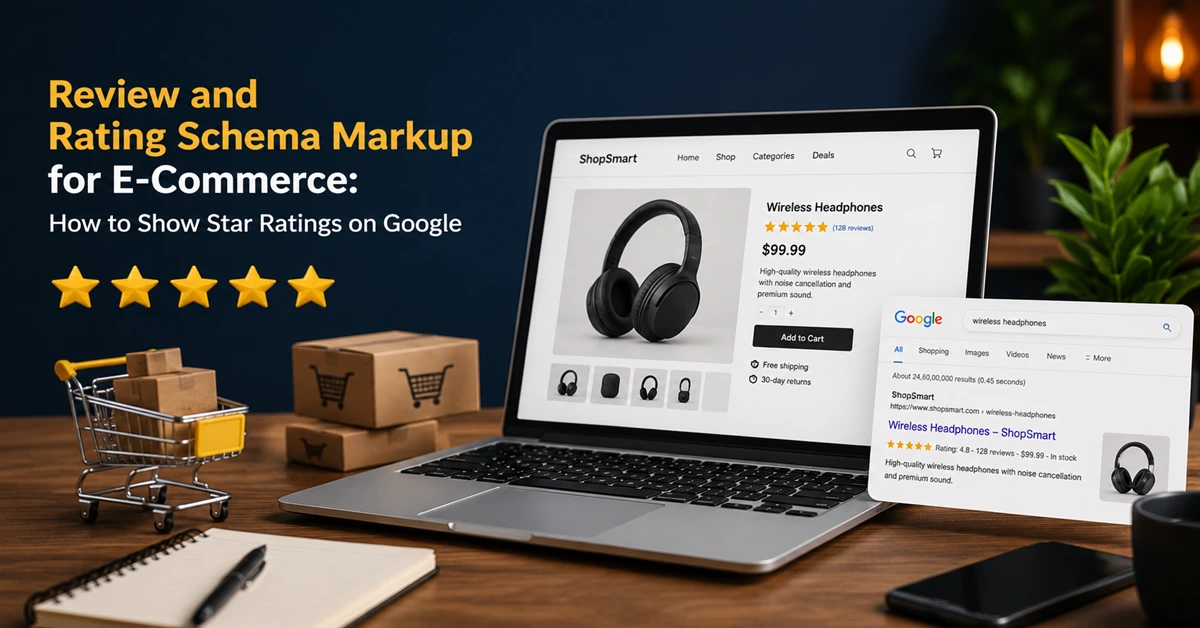
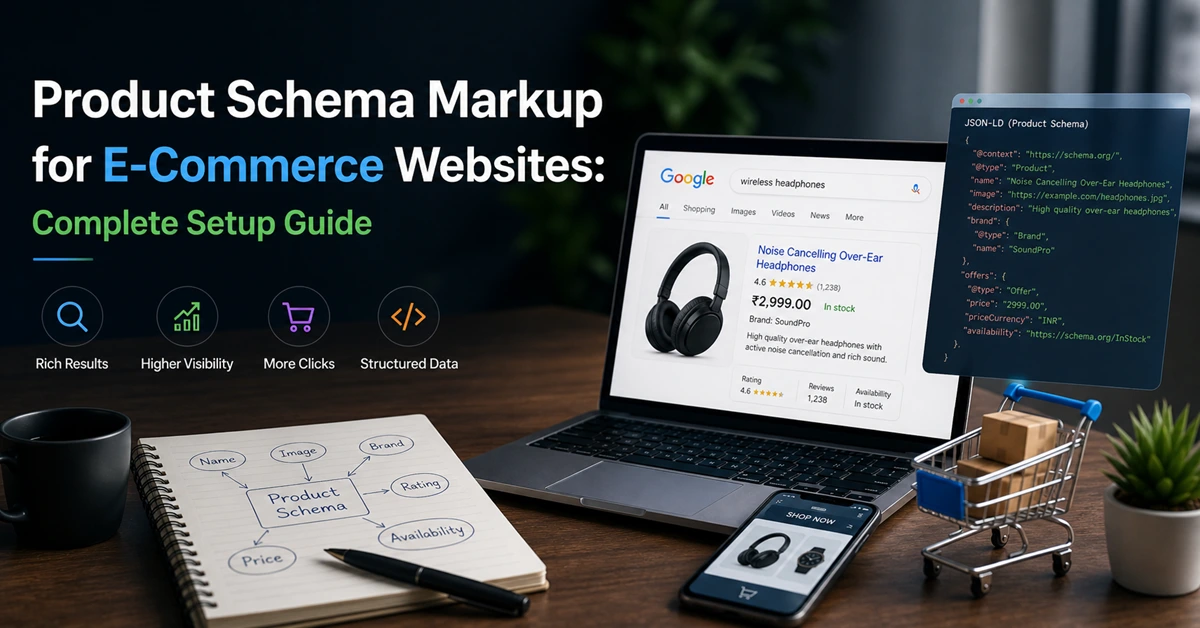
Structured data, often referred to as Schema Markup, provides search engines with additional information about your website.
For ecommerce businesses, Product Schema, Review Schema, Breadcrumb Schema, and Organisation Schema can improve how listings appear in search results.
Although structured data doesn’t guarantee higher rankings, it can improve visibility by making search listings more informative and appealing to potential customers.
Improving Website Performance
Website speed has a direct impact on user experience.
Slow-loading pages can frustrate shoppers and increase bounce rates, particularly on mobile devices.
Optimising page speed, improving Core Web Vitals, compressing images, and creating a mobile-friendly shopping experience helps keep visitors engaged and encourages them to complete their purchases.
Resolving Technical SEO Issues
Even the best content won’t perform well if search engines struggle to crawl your website.
Technical SEO focuses on identifying and resolving issues such as:
- Broken links
- Crawl errors
- Duplicate pages
- Redirect chains
- Missing metadata
- Indexation problems
Addressing these issues helps ensure your most valuable pages can be discovered, indexed, and ranked.
Turning Organic Visitors Into Customers
Generating traffic is only half the battle.
Once visitors land on your website, every part of their experience influences whether they stay, browse products, and ultimately make a purchase.
High-performing ecommerce stores typically share several characteristics:
- Easy-to-use navigation
- Fast-loading pages
- Helpful product descriptions
- Clear pricing
- High-quality images
- Customer reviews
- Simple checkout processes
SEO supports each of these improvements because search engines increasingly reward websites that provide positive user experiences.
From our experience working with Australian ecommerce businesses, stores that combine technical SEO with thoughtful user experience improvements tend to generate more consistent organic revenue over time.
Common SEO Mistakes That Hold Online Stores Back
Many ecommerce businesses struggle with organic growth because they’re unknowingly overlooking the basics.
Some of the most common SEO mistakes include:
- Using duplicate manufacturer product descriptions
- Publishing category pages with very little unique content
- Ignoring technical SEO issues that affect crawling and indexing
- Building weak internal linking structures
- Targeting broad keywords with little buying intent
- Failing to optimise for mobile users
- Not implementing structured data
- Neglecting ongoing SEO maintenance
The good news is that these issues are often fixable.
In many cases, addressing technical problems, improving content quality, and strengthening website architecture can lead to noticeable improvements in search visibility and organic traffic without requiring a complete website redesign.
Why Long-Term SEO Delivers Sustainable Growth
Paid advertising certainly has its place, especially when launching a new product, promoting a seasonal sale, or generating immediate traffic. The challenge is that once your advertising budget runs out, so does your visibility.
SEO works differently.
Every improvement you make, whether it’s optimising product pages, strengthening category content, fixing technical issues, or earning quality backlinks helps build your website’s authority over time. As that authority grows, your online store becomes better positioned to attract qualified visitors without paying for every click.
This is why many successful ecommerce businesses view SEO as a long-term investment rather than a short-term marketing tactic.
Google also continues to emphasise the importance of publishing helpful, people-first content while maintaining technically sound websites that deliver a positive user experience. Businesses that consistently follow these best practices are generally more resilient to algorithm updates and better equipped for sustainable growth.
Expert Insights
According to Shoaib Mughal, Founder of Marketix Digital:
“One of the biggest mistakes we see is businesses investing heavily in paid advertising before addressing the SEO issues already limiting their website’s performance. Improving technical SEO, category pages, website architecture, and content creates a much stronger foundation for long-term growth. Once those fundamentals are in place, every marketing channel tends to perform better including paid advertising.”
This practical approach reflects an important lesson many growing ecommerce brands eventually learn: sustainable growth comes from continuously improving the overall website, not simply increasing traffic.
A Strategic Approach Makes the Difference
Successful ecommerce SEO campaigns rarely rely on a single tactic.
Instead, they combine technical optimisation, content improvements, keyword research, internal linking, authority building, and ongoing performance analysis into one cohesive strategy.
For example, improving category pages may increase rankings for commercial search terms, while better internal linking helps search engines discover deeper product pages. At the same time, technical improvements such as faster page speeds and better mobile usability create a smoother shopping experience that encourages visitors to stay longer and complete their purchases.
This holistic approach has consistently produced stronger long-term results than focusing on rankings alone. The goal isn’t simply to generate more traffic it’s to attract the right visitors and convert them into loyal customers.
Why Investing in Ecommerce SEO Services Pays Off
Growing an ecommerce business isn’t about finding a quick fix. It’s about building a website that customers can easily find, navigate, and trust.
Professional ecommerce SEO services help achieve exactly that by improving your website’s technical performance, strengthening content, targeting high-intent keywords, and creating a better overall shopping experience.
While paid advertising can deliver immediate visibility, SEO continues working long after the initial optimisation is complete. As your website gains authority, attracts backlinks, and ranks for more commercial search terms, it becomes an increasingly valuable source of qualified traffic and consistent revenue.
Whether you’re launching a new online store or looking to scale an established ecommerce business, investing in a well-planned SEO strategy is one of the smartest decisions you can make for long-term growth.
The businesses that achieve lasting success online aren’t always the ones with the biggest advertising budgets they’re often the ones that consistently improve their websites, understand their customers, and adapt to changing search behaviour.
FAQs about Ecommerce SEO Services
Ecommerce SEO services help online stores improve their visibility in search engines through technical SEO, keyword optimisation, content improvements, and website performance enhancements.
Most businesses begin seeing noticeable improvements within three to six months, although timelines vary depending on your website, competition, and overall SEO strategy.
Yes. By attracting shoppers who are actively searching for your products, ecommerce SEO can increase qualified traffic, improve conversion opportunities, and support long-term revenue growth.
Most ecommerce SEO campaigns include technical SEO audits, keyword research, product and category page optimisation, content creation, internal linking, schema markup, link building, and monthly reporting.
Neither is better, they work best together. Paid advertising delivers immediate traffic, while SEO builds sustainable organic visibility that continues generating traffic over time.
Professional SEO can be implemented on Shopify, WooCommerce, Magento, BigCommerce, Adobe Commerce, and custom-built ecommerce websites.
Technical SEO helps search engines crawl, index, and understand your website more efficiently while improving page speed, mobile usability, and overall user experience.
Choose an agency with proven ecommerce experience, transparent reporting, technical expertise, measurable case studies, and a strategy focused on growing revenue rather than simply improving rankings.