
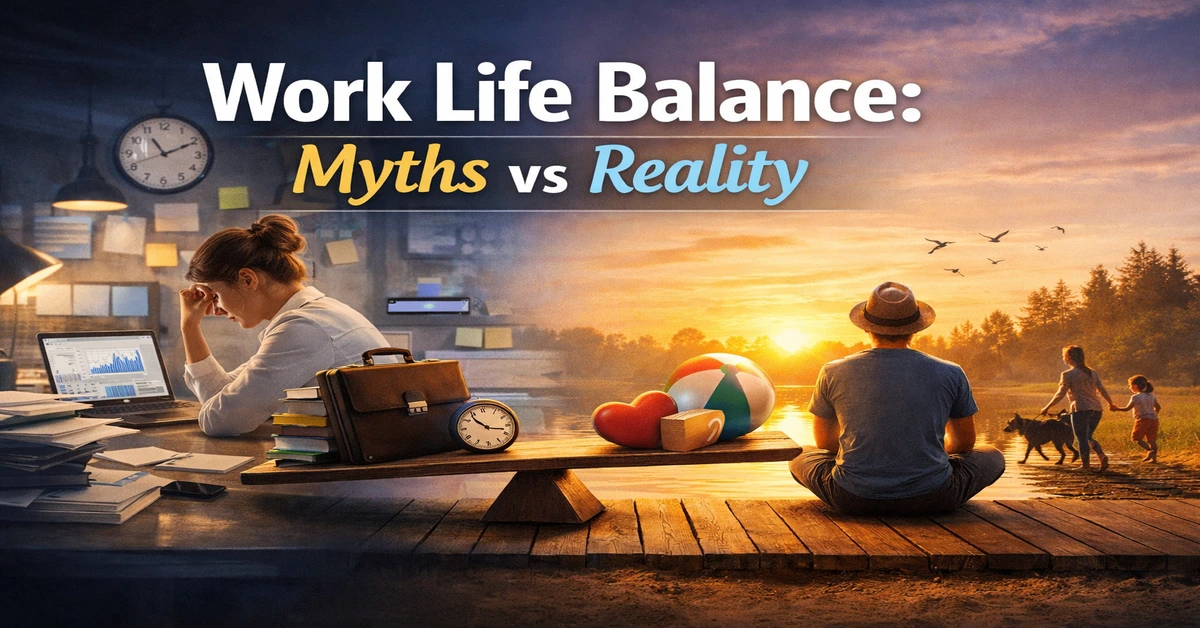
You’ve probably heard people talk about “work life balance” like it’s this magical state professionals are supposed to reach. It comes up in job ads, LinkedIn posts, and career talks. But for many of us, especially in busy roles or demanding schedules, that ideal feels distant, unrealistic, or even a bit mythical.
This article breaks down what work life balance actually means, unpacks why so many common beliefs exist, and offers grounded insights on adjusting your life and routines in ways that genuinely support your well-being without chasing perfection.
How People Commonly Define Work Life Balance?
When we hear the phrase work life balance, most of us picture some perfect equilibrium where work and personal life hold equal weight, never interfering with one another. That image probably came from decades of workplace culture pushing the idea that success and happiness depend on neatly dividing your time and energy.
In reality, “balance” isn’t a switch you can flip. It’s more like steering a boat through varying currents. A few years ago, the concept began gaining traction alongside discussions about flexible work hours and better working conditions. Over time, however, it became oversimplified into an expectation that you can compartmentalize work and life into two distinct buckets. (Forbes)
That’s where the first misunderstanding begins.
Work Life Balance Myths vs Work Life Balance Reality:
The Myth of Perfect Balance:
A lot of people believe that work life balance means spending equal time at work, at home, and on personal interests. That belief rests on a mathematical illusion: if you sleep eight hours, work eight hours, and then have eight hours left, balance should magically appear.
That doesn’t reflect real life. Before you even start your day, you’re checking emails, planning your commute, or juggling errands. By the time you clock off, your mind may still be mulling over unfinished tasks. Someone once described balance as trying to split an already incomplete pie evenly; the idea assumes there’s a neatly divisible structure when there isn’t. (IMS India)
The Reality of Shifting Priorities:
Instead of a fixed state of equilibrium, balance is dynamic. There are days when work demands more of you and times when personal life takes priority. That’s normal. The real challenge isn’t making the numbers line up. It’s managing your energy and attention in a way that aligns with your priorities at a given moment.
Life isn’t a binary between work and life. A late-night presentation might coincide with time you could otherwise spend with family. An afternoon catch-up with friends might mean shifting a meeting. The fluidity between these roles is part of the real work life balance experience itself.
Is it a Myth or Just Misunderstood:
Some thought leaders argue that the very phrase work life balance is misleading because it suggests a tidy separation between two sides of life that are deeply interconnected. In truth, work and personal life influence each other constantly—what happens in one context often affects the other. (Forbes)
One survey found that 59% of employees have considered leaving a job because their work life balance fell off, showing how deeply this issue affects people’s decisions and satisfaction. (Forbes)
When we frame balance as achievable through a perfect split of hours, we inadvertently set up a goal that almost no one can consistently hit. Instead, thinking in terms of work life rhythm—a flexible pattern that accommodates changing needs—offers a healthier approach.
The Importance of Work Life Balance for Long-Term Success:
So why does all this matter?
For starters, work life balance isn’t just a feel-good buzzword. Employees are increasingly valuing the integration of their entire lives with their careers. In fact, recent surveys show that work life balance has overtaken salary as one of the top factors people consider when choosing or staying in a job. In a 35-country survey of over 26,000 workers, 83% ranked work life balance and job security as top priorities, even slightly ahead of pay. (The Guardian)
And it’s not just about satisfaction. Poor balance correlates with higher stress, anxiety, and physical symptoms. A study reported that 40% of workers cite stress at their job as a major factor in their lives, and many experience issues like insomnia, headaches, and depression as a result of imbalance. (ZipDo)
Workers who feel supported in their well-being also show higher engagement. Organizations that care about employee health tend to outperform others and retain talent more effectively. (HC-Resource)
This isn’t just theory or “nice to have” sentiment. The numbers reflect real, measurable outcomes tied directly to how people manage their work and personal lives.
Work Life Balance in Corporate Jobs:
In corporate settings, the idea of balance can be especially challenging. Long meetings, back-to-back video calls, and expectations around availability often extend the workday beyond official hours. Some people I’ve worked with shared how a typical “day off” can still feel like an extension of the work week because the phone never stops buzzing.
In this environment, many professionals feel pulled in every direction. That’s one reason structured planning and intentional habits matter. Time you block for focused work, rest, or personal activities becomes an act of self-respect as much as productivity.
Here’s where good structure helps. When you design your day with intention, you carve out breathing space instead of leaving it to chance.
Internal link landmark: Implement practical structured time management techniques such as prioritizing high-value tasks early in the day and setting clear work windows.
Refer to this article for detailed tips:Time Management Tips That Actually Improve Productivity
This kind of planning isn’t about shoehorning balance into your schedule. It’s about creating a rhythm that works for you and your responsibilities.
Work Stress and Burnout: When Work Life Balance Breaks Down
A major consequence of imbalance is burnout. You might have heard people say that burnout feels like exhaustion mixed with cynicism and a lack of energy. That’s not far from reality.
Recent reports show that as many as 85% of workers feel burned out or exhausted due to work, especially younger professionals. Many end up taking time off due to mental health struggles related to work pressure. (The Times)
Burnout doesn’t just affect mood. It impacts productivity, concentration, learning, and even physical health. Stress left unmanaged can lead to chronic health problems, from insomnia and headaches to more serious conditions over time. (ZipDo)
Even in high-stress professions like healthcare or IT, where long hours are standard, burnout is significantly linked to poor perceptions of work life balance. Research among cybersecurity professionals found that 44% experienced severe work-related stress, with a large portion reporting burnout. (arXiv)
This shows why just talking about balance isn’t enough. Supporting mental and emotional well-being at work requires systems, habits, and environments that acknowledge human needs.
To reduce stress and protect your energy, consider exploring practical time management strategies here:Time Management Tips That Actually Improve Productivity
Mental Health and Work Life Balance:
Work life balance has a deep connection to mental health. Researchers consistently find that poor balance correlates with higher levels of stress, anxiety, and depression. One study involving professional women in high-stress fields found a strong negative correlation between work life balance and mental health symptoms, meaning as perceived balance dropped, stress and anxiety rose significantly. (RSIS International)
The stress of trying to juggle everything without adequate support often leads to emotional exhaustion. This isn’t just anecdotal. Surveys show many workers report that work remains the top stressor in their lives, and unresolved stress can contribute to many physical and psychological issues. (ZipDo)
But when people feel their overall lifestyles are integrated and supported, psychological well-being improves. Workers who believe their personal and professional lives are respected report higher job satisfaction and resilience. (HC-Resource)
Good practices like meaningful downtime, disconnecting from devices, and protecting personal time contribute to stronger focus and better cognition throughout the day. (amaehealth.com)
This makes it clear that supporting mental health isn’t an add-on. It’s central to how we structure work and life.
Moving Toward a Realistic Work Life Balance:
Instead of chasing an unattainable “perfect balance,” it helps to think in terms of practical alignment between your priorities and what your schedule allows on any given day.
Balance isn’t about dividing hours. It’s about how you manage priorities, set boundaries, and protect your capacity.
Setting Boundaries That Protect Energy:
Boundaries are personal rules you set around your time. For example, deciding not to check work messages after a certain hour, taking regular breaks during tasks, or planning personal activities with the same commitment you give work meetings. These tiny acts help create structure in a world that otherwise drags you in every direction.
Aligning Work With Personal Values:
Your priorities change over time. A project deadline may be critical this week, while family needs might take precedence next. Balance means recognizing those shifts and making intentional choices that reflect what matters most.
How to Improve This Balance Without Chasing Perfection?
Improvement starts with small, consistent steps. Practicing better time organization and protecting key hours in your day can make space for both professional and personal goals.
For actionable guidance on managing tasks and energy effectively, you can use this resource for practical time management tips:Time Management Tips That Actually Improve Productivity
Making these incremental changes doesn’t guarantee perfect balance every day, but it does build a more sustainable pattern that respects your needs without elevating stress.
What Work Life Balance Really Looks Like in Real Life?
Real life rarely fits into neat boxes. Work and personal life intersect, overlap, and sometimes conflict. But recognizing this doesn’t mean surrendering to chaos. It means prioritizing what you can control and designing a life that supports both your responsibilities and your well-being.
Rather than chasing a mythical equilibrium, embrace a rhythm that evolves with your circumstances. Celebrate progress, not perfection. Let balance be a reflection of conscious choices rather than a myth you feel pressured to achieve.
Conclusion: What Work Life Balance Really Looks Like in Real Life
Work life balance isn’t a tidy scale where every moment of your life fits into an even mold. It’s a dynamic process that changes with your circumstances, values, and responsibilities. Research consistently shows that prioritizing holistic well-being, setting boundaries, and integrating meaningful habits into your routine leads to better mental health, reduced burnout, and greater job satisfaction.
By recognizing the myths and adapting practical strategies, you can create an approach to balance that supports your life realistically. And that, more than chasing perfection, is what truly matters.
FAQs
Work life balance is not a myth, but the idea of perfect balance is unrealistic. Balance shifts depending on workload, personal responsibilities, and life stages. It is more about managing priorities than splitting time equally.
Work life balance means maintaining a healthy relationship between professional responsibilities and personal life so neither consistently harms your wellbeing. It focuses on sustainability rather than perfection.
It is difficult because modern work culture promotes constant availability. Digital connectivity, performance pressure, and unclear boundaries often blur the line between work and personal time.
Work life balance reduces stress, prevents burnout, and improves mental health. Employees who feel balanced are generally more productive, engaged, and satisfied in their careers.
Poor balance increases stress, anxiety, emotional exhaustion, and sleep issues. Over time, chronic imbalance can contribute to burnout and reduced overall wellbeing.
Yes, but it requires structured planning, boundary setting, and supportive workplace culture. Time management systems and clear communication significantly improve balance in corporate roles.
Common myths include believing balance means equal hours for work and life, that it stays permanent once achieved, and that only remote jobs allow flexibility. In reality, balance is dynamic and personal.
Start with small changes such as prioritizing key tasks, limiting after hours communication, scheduling personal time intentionally, and using structured time management techniques. Consistency matters more than drastic changes.