You are two weeks from salary. The Myntra end-of-season sale starts today. Your phone screen cracked this morning. Or maybe it is none of these things but you have all seen the Pay Later button sitting quietly at checkout and wondered whether it is actually a good idea.
Buy Now Pay Later Apps have become one of the most widely used payment options in India. It shows up on Amazon, Flipkart, Zomato, BookMyShow, and hundreds of smaller platforms. Millions of Indians use it every month without fully understanding how the interest-free period actually works, what happens when you miss a payment, or whether it is quietly affecting their CIBIL score.
This guide covers everything you need to know. What BNPL is, how it works in India, which apps are worth using in 2026, what the real costs look like, and how to use it without creating a problem for yourself down the road.
In this article, we will also explore the top Buy Now Pay Later Apps available in the market today.
What is BNPL? Buy Now Pay Later Explained in Plain English
The simple definition
BNPL stands for Buy Now Pay Later. It is exactly what it sounds like. You make a purchase today, the app pays the merchant on your behalf, and you repay the app later, either in one payment within 15 to 30 days at zero interest, or in smaller monthly instalments spread across 3 to 12 months.
The key thing to understand is that you are borrowing money every time you use BNPL, even when it feels free. The money has to come back. The question is just when and whether any fees apply along the way.
How does BNPL work step by step?
- You shop on a participating platform and choose the BNPL option at checkout.
- The app does a quick digital check using your PAN and Aadhaar. For new users this takes a few minutes. For returning users it is instant.
- You receive a credit limit based on your eligibility. This could be anywhere from Rs 5,000 to Rs 1 lakh depending on the app and your profile.
- The app pays the merchant immediately on your behalf. You receive the product or service right away.
- You repay the app either in one payment before the due date at zero interest, or in EMIs over several months, usually with a processing fee.
| Quick summary: BNPL is short-term credit at the point of purchase. It is faster and easier to access than a credit card, but the repayment obligation is real and the penalties for missing a due date can be significant. |
How is BNPL different from a credit card?
Many people treat BNPL as an alternative to a credit card. In some ways it is, but there are important differences.
| Feature | Credit Card | BNPL App |
| Eligibility | Strict income and CIBIL score requirements | Easier, minimal credit history needed |
| Approval time | Days to weeks | Minutes or instant |
| Interest-free period | Up to 50 days typically | 15 to 30 days |
| Annual fee | Usually yes | Usually no |
| Rewards and cashback | Yes, often generous | Rarely |
| Late payment penalty | High | Moderate but rising in 2026 |
| CIBIL score impact | Yes | Increasingly yes in 2026 |
| Works offline | Yes, at card terminals | Depends on the app |
| Best for | Larger purchases, rewards, travel | Small to mid-sized everyday purchases |
Why BNPL Grew So Fast in India
BNPL did not become popular by accident. It grew because it solved a real problem for a large number of Indians who had no easy access to credit through traditional channels.
| 5% | of Indian adults have a credit card, meaning the vast majority of the population has no revolving credit access |
| Rs.30.45B | India’s BNPL market size in 2026, up from near zero just five years ago (Research and Markets, 2026) |
| 39% | of India’s BNPL market share belongs to Gen Z, the fastest growing demographic in the sector |
| 51% | reduction in cart abandonment reported by merchants when BNPL is embedded at checkout |
Three things in particular drove this growth in India specifically.
- The UPI foundation. Once hundreds of millions of Indians got comfortable with instant digital payments through UPI, adding a short-term credit layer on top of those same payment rails felt natural rather than risky. BNPL did not have to change behaviour, it built on top of it.
- The credit card gap. Banks have historically been selective about who gets credit cards in India. BNPL platforms used digital underwriting based on transaction behaviour rather than formal income proof, which opened access to people the banking system was ignoring.
- Mobile-first shopping habits. As more Indians started buying groceries, clothes, electronics, and travel on their phones, BNPL was right there at checkout. The one-tap experience made it feel effortless rather than like a financial product.
The Best Buy Now Pay Later Apps in India 2026
Here is an honest review of the most widely used BNPL apps in India right now. Each one is covered with the same structure so you can compare them directly.
1. LazyPay
Best overall for wide merchant coverage
- What it is: One of India’s most established BNPL platforms, backed by PayU. Available across 45,000 merchants including Zomato, Swiggy, BookMyShow, Myntra, and major e-commerce sites. Launched in 2017 and serving over 6 million consumers.
- Credit limit: Up to Rs 1,00,000 for full KYC users. Rs 10,000 free limit for basic users.
- Interest-free period: 15 to 30 days at zero interest
- EMI options: 3, 6, 9, or 12 months with no-cost EMI options
- Best for: Anyone who shops or orders across multiple platforms and wants a single BNPL account that actually works everywhere.
- Key advantage: The widest merchant network of any Indian BNPL app. Works across food delivery, entertainment, fashion, and e-commerce from a single account.
- Honest limitation: Some users report aggressive collection follow-ups for late payments and unexpected late payment penalties. Read the fee structure carefully before activating your account.
2. Amazon Pay Later
Best for Amazon shoppers
- What it is: Amazon’s built-in credit service for purchases on Amazon India, offered in partnership with Capital Float and IDFC FIRST Bank. Seamlessly integrated into the Amazon checkout experience with no additional app required.
- Credit limit: Varies based on eligibility. Rs 60,000 annual cap for minimum KYC users. Higher limits for full KYC.
- Interest-free period: 30 days at zero interest
- EMI options: 3 to 12 months. Note that a 1.18% processing fee including GST applies on EMI conversions.
- Best for: Regular Amazon shoppers who want frictionless checkout without a credit card. Particularly useful for Amazon Prime members who shop frequently.
- Key advantage: No extra app download needed. Completely integrated with your existing Amazon account and ordering flow.
- Honest limitation: Only works within the Amazon ecosystem. If you shop elsewhere, this account adds no value to those purchases.
3. Flipkart Pay Later
Best for Flipkart sale events
- What it is: Flipkart’s built-in BNPL service integrated directly into the Flipkart app. Particularly popular during Big Billion Days and other major sale events when shoppers want to spread the cost of multiple purchases.
- Credit limit: Up to Rs 70,000 for eligible users
- Interest-free period: 30 days at zero interest
- EMI options: Available with standard EMI options
- Best for: Regular Flipkart shoppers, particularly during sale seasons when you might want to buy multiple items without depleting your account in one go.
- Key advantage: Works seamlessly with Flipkart’s catalogue and sale mechanics. No friction at checkout for regular Flipkart users.
- Honest limitation: Restricted to the Flipkart ecosystem. Some users report unexpected changes to credit limits and payment terms without advance notice.
4. Paytm Postpaid
Best for offline and online combined use
- What it is: Paytm’s BNPL product reintroduced after a pause in 2024. The pause was due to a broader decline in asset quality across the industry. Paytm resumed the product after turning profitable and improved underwriting standards.
- Credit limit: Up to Rs 60,000
- Interest-free period: 30 days at zero interest
- EMI options: Available with standard options
- Best for: Existing Paytm users who want a single app for UPI payments, bill payments, and BNPL. The broadest offline usability of any BNPL app thanks to Paytm’s QR code network.
- Key advantage: Works at millions of physical merchants across India who accept Paytm QR codes. Most BNPL apps are online-only, making Paytm Postpaid genuinely different for offline use.
- Honest limitation: Currently being rolled out selectively. Not available to all users and the eligibility criteria are not always clearly communicated upfront.
5. CRED Pay Later
Best for creditworthy users seeking higher limits
- What it is: CRED’s credit line product for its existing member base. CRED selects members based on creditworthiness, so the user base tends to have better credit profiles and the products reflect that with better terms.
- Credit limit: Varies based on CRED score and member profile. Generally higher than mass-market BNPL apps.
- Interest-free period: 30 days at zero interest
- EMI options: Available on partner merchants
- Best for: Existing CRED members who want an additional credit line alongside their credit card management. The rewards ecosystem makes regular use more beneficial than other BNPL apps.
- Key advantage: CRED’s curated member base means credit limits and terms tend to be more favourable. The rewards structure also adds value that most other BNPL apps do not offer.
- Honest limitation: Only available to CRED members, which requires having a credit card in the first place. Not accessible to first-time credit users or those without cards.
6. Airtel Pay Later
Best for Airtel subscribers
- What it is: Airtel’s BNPL offering through the Airtel Thanks app, powered by Airtel Finance. Allows users to pay for Airtel recharges, utility bills, shopping, and travel bookings on a credit line without immediate cash.
- Credit limit: Varies based on Airtel customer profile and tenure
- Interest-free period: 30 days at zero interest
- EMI options: Available on select transactions
- Best for: Existing Airtel subscribers who want to manage telecom bills and BNPL through one app they already use.
- Key advantage: Strong integration with Airtel’s ecosystem. The app also offers discounted gift cards for over 200 brands including Myntra, Amazon, and Flipkart, adding extra value beyond just BNPL.
- Honest limitation: Less versatile than LazyPay or Paytm Postpaid for general retail spending outside the Airtel ecosystem.
| Important note on Simpl: Simpl was one of India’s most popular early BNPL apps. In September 2025, the RBI ordered Simpl to halt all payment, clearing, and settlement activities due to lack of authorisation under the Payment and Settlement Systems Act. The company went through significant restructuring. Verify Simpl’s current operational status directly on their official website before attempting to use any account you may have had with them. |
BNPL Apps Side-by-Side Comparison
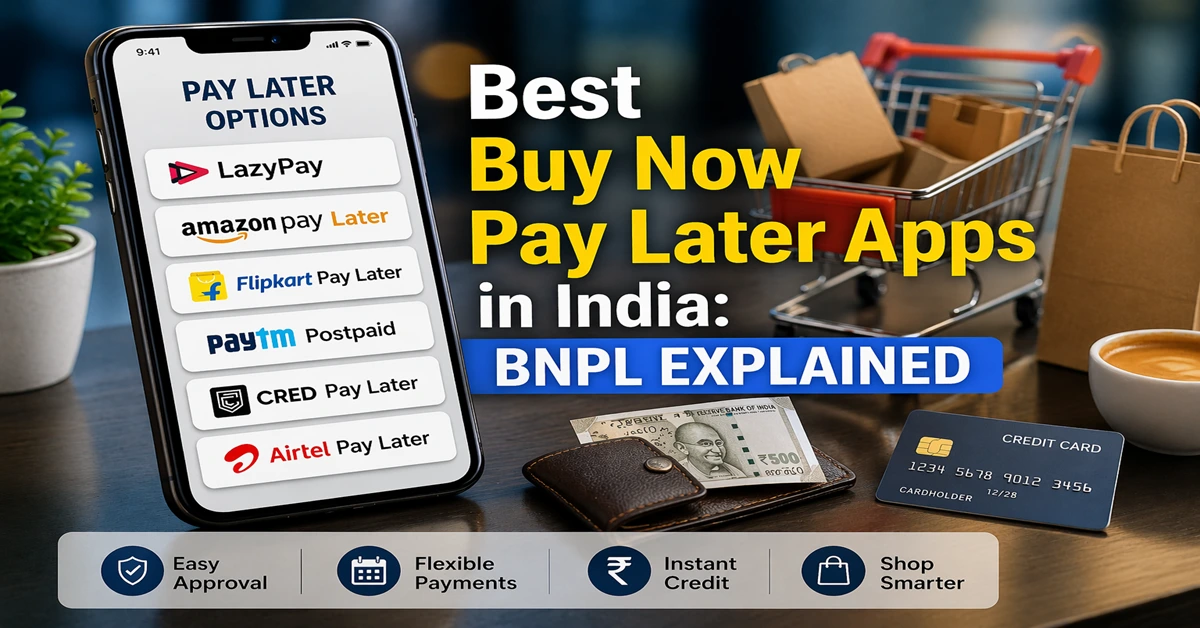
Here is the quick reference table for all six apps currently operating in India.
| App | Max Limit | Interest-Free | EMI Available | Works Offline | Best For |
| LazyPay | Rs 1,00,000 | 15 to 30 days | Yes, 3-12 months | Limited | Wide merchant use |
| Amazon Pay Later | Rs 60,000 | 30 days | Yes (fee applies) | No | Amazon shoppers |
| Flipkart Pay Later | Rs 70,000 | 30 days | Yes | No | Flipkart sale events |
| Paytm Postpaid | Rs 60,000 | 30 days | Yes | Yes | Offline and online |
| CRED Pay Later | Varies higher | 30 days | Yes | Limited | Existing CRED members |
| Airtel Pay Later | Varies | 30 days | Yes | Limited | Airtel subscribers |
The Hidden Costs of BNPL That Nobody Tells You About
The marketing for most BNPL apps focuses entirely on the interest-free period and the easy checkout. What gets less attention is what happens when things go slightly wrong. Here is what to watch for.
Late payment fees can be surprisingly high
Missing a BNPL due date by even one day triggers a late payment fee. Depending on the platform and the outstanding amount, this can range from Rs 200 to Rs 1,200 per missed payment. For a Rs 3,000 purchase that you are a few days late repaying, the effective cost can push the annualised interest rate very high very fast.
The fix is simple: set a calendar reminder three days before every BNPL due date. Not on the due date itself, three days before, so you have time to transfer funds if needed.
EMI conversions usually carry a processing fee
Zero interest does not mean zero cost when you convert a purchase into EMIs. Most platforms charge a processing or convenience fee on EMI conversions. Amazon Pay Later charges 1.18% including GST. Depending on the EMI tenure and the purchase amount, this adds a real cost that is worth calculating before you choose an EMI plan over a lump-sum repayment.
Your CIBIL score is increasingly at risk
In 2026, most major BNPL platforms report repayment behaviour to credit bureaus like CIBIL and Experian. This is a change from the early years of BNPL when many platforms did not report to bureaus at all.
The implication is significant in both directions. If you use BNPL for small amounts and always repay on time, it can actively build your credit history, which is a real benefit for young Indians with limited credit records. If you miss payments, your CIBIL score takes a hit exactly as it would from a missed loan EMI. A damaged score can affect your ability to get a home loan, car loan, or credit card years later.
Using multiple apps simultaneously is a common trap
Having a Rs 10,000 limit on LazyPay, Rs 15,000 on Amazon Pay Later, and Rs 20,000 on Paytm Postpaid means you technically have Rs 45,000 of active BNPL credit. Each individual purchase might feel small and manageable. The total does not.
If you use multiple BNPL apps, keep a running total of your overall BNPL exposure in your notes app or a spreadsheet. Treat it exactly like you would treat a loan balance. Because it is one.
Is BNPL Safe in India? What the RBI Rules Actually Say
BNPL in India went through a significant regulatory tightening between 2023 and 2025. The short version is that the market is now more regulated and more consumer-friendly than it was two years ago, but consumers still need to be informed users.
- All legitimate BNPL apps must partner with an RBI-regulated NBFC or bank. This means there is a licensed lender behind every credit product, which gives you regulatory protection if the app changes its terms or faces operational issues.
- The RBI’s Digital Lending Directions 2025 consolidated earlier guidelines and imposed stricter standards on onboarding, fee disclosure, fund flows, and grievance redress. You are now entitled to a Key Fact Statement before you accept any credit product.
- Credit loading into prepaid wallets is prohibited. This is why some early BNPL models that worked through prepaid instruments had to restructure. Legitimate BNPL credit now flows through regulated lending accounts, not prepaid wallets.
- The RBI action against Simpl in September 2025 showed that the regulator will act against platforms operating without proper authorisation. This is consumer protection in action, not a sign that BNPL is generally unsafe.
Who Should Use BNPL and Who Should Avoid It
BNPL makes sense if you
- Are buying something you genuinely need and have the money to repay, but the timing is slightly awkward relative to your salary date.
- Are making a considered purchase that benefits from spreading across 3 to 6 months and you have calculated the total cost including any processing fees.
- Are building a credit history with no existing credit record and plan to use BNPL for small, manageable amounts that you repay on time consistently.
BNPL is risky if you
- Do not currently have the money to repay and are hoping something will come through. BNPL defers payment, it does not reduce the amount owed.
- Already have outstanding credit card debt, personal loans, or other BNPL balances. Adding more credit lines when existing ones are under strain increases the risk significantly.
- Are using it for lifestyle purchases that feel affordable in small instalments but will collectively create a debt burden by end of month.
- Have a pattern of forgetting due dates. The late fee structure on most BNPL apps is punishing enough that one missed payment can eliminate any benefit you got from the interest-free period.
BNPL vs Credit Card vs Personal Loan: Which is Right for Your Situation?
| Your situation | Best option | Why |
| Buying a Rs 2,000 item, repaying in 15 days | BNPL | Zero cost if repaid on time, instant approval |
| Buying a Rs 50,000 laptop, repaying over 6 months | Credit card EMI | Lower total cost than BNPL EMI for large amounts |
| No credit history, want to build CIBIL score | BNPL (small amounts only) | Easiest access, builds credit with on-time repayment |
| Emergency, need large amount quickly | Personal loan | Higher limit, structured repayment, transparent cost |
| Regular purchases where you want rewards | Credit card | Cashback and points are not available on BNPL apps |
| Offline shopping at local stores | Paytm Postpaid | Widest offline merchant network of any Indian BNPL |
Final Thoughts: Buy Now Pay Later(BNPL) is a Tool, Not a Free Lunch
Buy now pay later is one of the most genuinely useful financial innovations India’s fintech sector has produced in the last decade. It has extended credit access to millions of Indians who previously had none. It has made everyday purchases more manageable for young professionals, students, and gig workers whose cash flow does not always line up neatly with when expenses arrive.
Used well, BNPL costs you nothing and might even help you build a credit history you can use for bigger financial goals later. A home loan, a car loan, a business credit line. These things are easier to get when you have a track record of repaying credit on time.
Used carelessly, with multiple apps running simultaneously and no real tracking of total exposure, BNPL can create a kind of quiet financial stress that sneaks up on you. A Rs 2,000 purchase here and a Rs 3,000 purchase there, across three different apps, adds up in ways that feel manageable until suddenly they do not.
The best BNPL users treat every Pay Later transaction as a loan they are already committed to repaying on a specific date. Because that is exactly what it is. If you want to build a broader picture of how to manage your finances alongside BNPL, our guide on the best AI-powered personal finance apps in India covers apps that can help you track your total credit exposure automatically so nothing slips through.
And if you have experiences with any of these apps that you think other Indian consumers should know about, we would genuinely like to hear from you. Blog Arena 360 is built around real financial experiences from real Indian users. Visit our Write for Us page if you want to share your story.
FAQs about Buy Now Pay Later Apps in India
BNPL stands for Buy Now Pay Later. It lets you make a purchase immediately and pay for it later, either in one payment within 15 to 30 days at zero interest, or in smaller monthly instalments over 3 to 12 months. The BNPL app pays the merchant on your behalf and you repay the app.
BNPL can be completely free if you repay the full amount before the due date. The interest-free window is typically 15 to 30 days. If you convert to EMIs, most apps charge a processing fee. If you miss the due date, late payment penalties apply. Read the fee structure of any BNPL app carefully before your first use.
Yes, increasingly so in 2026. Most major BNPL platforms now report repayment behaviour to credit bureaus including CIBIL and Experian. Timely payments can help you build a credit history. Missing a payment can damage your CIBIL score in the same way a missed loan EMI would.
There is no single best app for everyone. LazyPay has the widest merchant network and works across the most platforms. Amazon Pay Later is the best choice if most of your shopping happens on Amazon. Paytm Postpaid is the strongest option for offline use. The best app is the one that works across the merchants and platforms you actually buy from.
You will be charged a late payment fee, typically between Rs 200 and Rs 1,200 depending on the platform and the outstanding amount. Your CIBIL score may be negatively affected if the missed payment is reported to a credit bureau. Your BNPL credit limit may be reduced or your account suspended. Never ignore a BNPL due date.