Something shifted in India’s marketing landscape over the last 18 months and a lot of brands missed it.
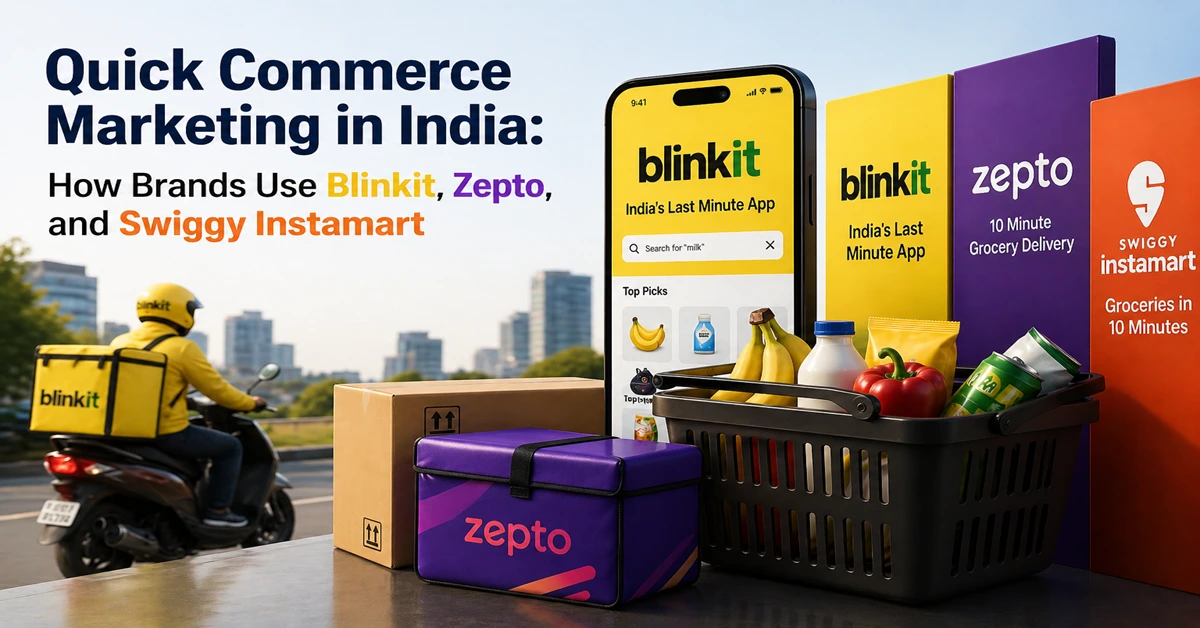
The conversation used to be simple. Quick commerce apps like Blinkit, Zepto, and Swiggy Instamart existed to solve one problem: getting groceries to your door in 10 minutes. Brands listed their products, consumers ordered, delivery riders zipped through city lanes. That was the whole story.
Except it was not. Because while everyone was watching the delivery speed numbers, something else was quietly happening. These apps were accumulating something extraordinarily valuable to marketers: purchase-ready consumers with high intent, specific location data, and a habit of opening the app multiple times a week.
As one industry observer put it: “When buying becomes this easy, visibility becomes that much more valuable. And in a world like that, the most effective advertising is simply the one that shows up when the user is ready.” Quick commerce marketing has become a standalone marketing channel in India, and brands that understood this first are pulling ahead of those still treating it purely as a distribution channel.
By creating a digital marketing strategy for Indian businesses gives you the complete framework.
What is Quick Commerce and Why It Has Become a Marketing Channel
Quick commerce defined
Quick commerce, often called q-commerce, is the delivery of products in under 30 minutes from order placement to doorstep. It operates through dark stores, which are small micro-warehouses located in residential neighbourhoods rather than large logistics hubs on city outskirts. Each dark store carries a curated inventory of high-frequency products and serves a two to three kilometre radius, which is what makes the delivery speed possible.
India’s quick commerce market crossed Rs 40,000 crore in annual Gross Merchandise Value in 2026 and is projected to reach $12.97 billion by 2029 at a compound annual growth rate of 17.6%. What started as a groceries-only channel has expanded significantly into snacks, personal care, electronics, beauty products, pharmacy items, alcohol in select cities, and even fashion.
This shift has led to the rise of innovative techniques in Quick Commerce marketing that brands are now leveraging to enhance visibility and engagement.
Why quick commerce became an advertising platform
Three things happened simultaneously that transformed these apps from delivery platforms into advertising channels.
- Frequency built intent data. Indian urban consumers began using Blinkit, Zepto, and Instamart three to five times a week rather than for occasional top-ups. This frequency generated rich purchase behaviour data that rivals anything Facebook or Google can offer for FMCG and consumer goods categories.
- Category expansion created discovery moments. When the apps expanded from groceries into personal care, snacks, beauty, and electronics, consumers started browsing rather than just searching for a specific item. Browsing creates discovery. Discovery creates advertising opportunity.
- High purchase intent makes ads efficient. Unlike social media advertising where you interrupt someone scrolling through content who may or may not be in a buying mood, q-commerce advertising reaches someone who has already opened a shopping app with their payment method linked. The intent gap between seeing an ad and completing a purchase is almost zero.
| Key insight: 73% of quick commerce orders happen outside traditional shopping hours. Consumers are ordering late at night, early in the morning, and during work-from-home breaks. This time distribution means brand visibility on these platforms reaches audiences at moments when traditional advertising channels are less active. |
The Numbers Behind India’s Quick Commerce Marketing Opportunity
| Rs 64,000 Cr | India’s quick commerce annual GMV in 2026, making it a genuine standalone retail and advertising channel |
| 2M+ | Daily orders processed across Blinkit, Zepto, and Swiggy Instamart combined in 2026 |
| 340% | Higher campaign performance for hyperlocal neighbourhood-targeted campaigns vs city-wide campaigns on q-commerce platforms |
| 8x | Higher ROI from micro-influencer campaigns integrated with q-commerce listings vs celebrity endorsements alone |
| $12.97B | Projected size of India’s quick commerce market by 2029, growing at 17.6% CAGR (ResearchAndMarkets, April 2026) |
Who is shopping on quick commerce in India?
The primary user base is urban millennials and Gen Z aged 18 to 35, concentrated in metros and Tier-1 cities. However, Swiggy Instamart is the most aggressive platform in Tier-2 city expansion and already operates in over 100 cities. The average basket value sits between Rs 450 and Rs 710 depending on the platform, with Blinkit skewing slightly higher due to its premium urban user base.
India’s Three Major Quick Commerce Platforms: A Brand’s Guide
Before you spend a rupee on quick commerce marketing, you need to understand how each platform is different, who uses them, and what advertising options they offer. Picking the wrong platform for your product category wastes budget and inventory.
Blinkit (owned by Eternal / Zomato)
- Market stats: Market leader with over 50% market share. Processes close to 1 million daily orders. Operates 500+ dark stores in metros. Average Order Value approximately Rs 709. EBITDA positive at cluster level.
- Primary audience: Urban professionals aged 25 to 40, high disposable income, metro-concentrated (Delhi NCR, Mumbai, Bengaluru, Hyderabad). Premium buyer profile with higher average basket value than competitors.
- Ad formats available: Sponsored listings (search and category placement), banner ads on home screen and category pages, brand store pages, coupon campaigns, sampling through order inserts.
- Best for brands that: Sell premium-positioned FMCG, snacks, beverages, personal care, or electronics. Have consistent stock availability to maintain listing quality scores. Can commit to metro-focused campaigns with higher CPMs.
- Brand tip: Blinkit rewards brands that maintain high in-stock rates. Before spending on sponsored listings, ensure your dark store inventory is consistently replenished. An out-of-stock sponsored listing is wasted spend and damages your category ranking.
Zepto (IPO-bound, founded by Stanford dropouts)
- Market stats: FY25 revenue of Rs 11,110 crore, up 150% year-on-year. Approximately 20 to 30% market share. 250+ dark stores in metros. 70.58 million app downloads in 2024. 45,000+ SKUs.
- Primary audience: Younger demographic aged 18 to 35, tech-first urban millennials and Gen Z, impulse-driven purchase behaviour, strong in Bengaluru, Mumbai, Hyderabad, and Delhi. More open to discovering new brands than Blinkit’s more habitual buyer.
- Ad formats available: Sponsored search placements, category banner ads, Zepto Cafe in-app brand integrations, new product launch placements, flash deal promotions, Zepto Pass subscription visibility.
- Best for brands that: Sell impulse-friendly products priced between Rs 100 and Rs 500. Are launching a new product and need rapid trial generation. Want to reach younger urban consumers who actively explore new brands rather than defaulting to known ones.
- Brand tip: Zepto’s audience has a higher new-brand openness than Blinkit’s. If you are a D2C brand or a challenger brand in a mature category, Zepto’s audience is genuinely more receptive to trying something unfamiliar than the habitual buyer on competing platforms.
Swiggy Instamart (Swiggy’s grocery arm)
- Market stats: 27% market share. GOV grew 101% year-on-year in Q4 FY25. Operates across 100+ cities including most Tier-2 markets. Average delivery time reduced from 17 minutes to 13 minutes in FY25. Instamart store base exceeds 1,100 locations.
- Primary audience: Broadest geographic reach of any q-commerce platform. Strong in Tier-2 cities. 58% of Instamart users also use Swiggy’s food delivery, creating cross-platform audience overlap. Families and older millennial demographic alongside younger users.
- Ad formats available: Instamart in-app ads, Swiggy ecosystem ads (food + grocery combined targeting), sponsored category placement, brand store, bundled meal-and-grocery campaign options, Swiggy One loyalty programme visibility.
- Best for brands that: Want the widest city coverage including Tier-2 markets. Have products relevant to family grocery shopping rather than impulse individual purchases. Want to leverage Swiggy’s combined food and grocery user base for cross-category campaigns.
- Brand tip: Swiggy Instamart is the only platform where you can run a campaign that reaches the same user through their food ordering behaviour and their grocery behaviour in the same session. For brands in food, beverages, or kitchen categories, this cross-category targeting is genuinely unique.
Quick Comparison: Which Platform Is Right for Your Brand?
| Factor | Blinkit | Zepto | Swiggy Instamart |
| Market share | 50%+ | 20 to 30% | 18 to 22% |
| Primary cities | Metro focused | Metro focused | Metro plus 100+ Tier-2 |
| Avg Order Value | Rs 709 | Rs 550 to 650 | Rs 619 |
| User age profile | 25 to 40 professionals | 18 to 35 millennials | Mixed, family-oriented |
| Best product type | Premium FMCG, staples | Impulse, D2C, snacks | Grocery, family, beverages |
| New brand openness | Moderate | High | Moderate |
| Tier-2 reach | Limited | Growing | Strongest |
| Cross-platform ads | Zomato integration | Standalone | Swiggy food integration |
Quick Commerce Advertising Formats Brands Are Using in 2026
Q-commerce platforms have developed advertising ecosystems that are more sophisticated than most brands realise. Here are the main formats and how brands are using them.
Sponsored listings and search placement
The most direct advertising format on all three platforms. When a consumer searches for “protein bar” or “face wash”, sponsored listings from brands that have paid for placement appear at the top of results. This is the q-commerce equivalent of Google Shopping ads, except the consumer is already in a checkout mindset rather than a research mindset.
Performance tends to be strong for established categories where consumers already know what they want. A consumer searching for “peanut butter” who sees a sponsored result for a new brand is meaningfully more likely to try it when the purchase friction is just two taps and 10-minute delivery.
Category and homepage banner ads
Large visual placements on the app home screen or at the top of category pages. These work best for new product launches, seasonal campaigns, and brand awareness building among users who open the app without a specific product in mind.
Blinkit’s home screen banner reaches a particularly premium audience because Blinkit’s user base skews toward high-income urban professionals. For a premium personal care brand or a premium food brand, this placement is genuinely valuable brand real estate.
Brand stores
All three major platforms now allow established brands to create a dedicated brand store within the app, essentially a mini-storefront with your full product range, brand imagery, and promotional offers. Category leaders in snacks, beverages, and personal care have built strong branded presences this way.
Brand stores work particularly well for brands with more than five to ten SKUs on a platform because they give the consumer a reason to browse your range rather than buying just the one product they searched for. Average basket value from brand store visitors tends to be significantly higher than from search-originated purchases.
New product launch placements
Quick commerce has become one of the most effective channels for new product trial generation in India. The combination of impulse buying behaviour, frictionless payment, and 10-minute delivery removes almost every barrier between a consumer seeing a new product and trying it.
Mamaearth, Wow Skin Science, and several D2C personal care brands have used Zepto specifically as a launch vehicle for new products because Zepto’s younger audience has significantly higher new-brand openness than traditional retail channels.
Sampling and order inserts
A less discussed but highly effective format: paying to include a product sample inside other brands’ deliveries, or running a campaign where your product is offered as a free sample with qualifying orders in your category.
This format is particularly effective for food and beverage brands because trial is the highest barrier to first purchase. A consumer who receives a free pack of your protein chips inside their Blinkit grocery order is far more likely to search for and purchase that product on their next session than someone who saw a banner ad.
Coupon and flash sale campaigns
All three platforms run regular promotional events, weekend flash sales, and category-specific deals where brands can participate by funding a temporary discount in exchange for prominent placement during the promotional window. These campaigns drive significant volume spikes and are particularly effective for driving repeat purchase from consumers who have tried a product once at full price.
Quick Commerce Marketing Strategies That Indian Brands Are Using Right Now
Hyperlocal neighbourhood targeting
The most significant strategic advantage q-commerce advertising offers over any other digital channel is granular geographic targeting at the neighbourhood level. Campaigns targeting specific neighbourhoods outperform city-wide campaigns by 340% on these platforms.
A protein supplement brand can identify which dark stores in Bengaluru are located near gyms and fitness centres, then concentrate their sponsored listing spend on those specific stores. A premium coffee brand can target Blinkit dark stores in high-income residential areas of Mumbai. A baby care brand can target Instamart stores in areas with high family household density.
This level of targeting does not exist on Meta or Google at any comparable cost per relevant impression. It is one of the genuinely new marketing capabilities that q-commerce has created.
Festival and seasonal surge campaigns
Quick commerce order volumes spike dramatically during festivals, long weekends, and major sporting events. Brands that plan and pre-fund campaigns around these windows capture significantly elevated consumer attention at moments of peak purchase intent.
During Diwali 2025, confectionery and gifting brands on Blinkit saw three to four times their normal daily order volume. Electronics accessories brands on Zepto reported similar spikes during IPL 2025 as consumers ordered TV snacks and drinks alongside impulse electronics. Brands that had secured sponsored placement in advance captured this surge. Brands that tried to activate during the peak found inventory and placement at a premium.
New product trial plus digital marketing combo
The most sophisticated brands are using quick commerce as the trial engine in a broader campaign structure. The strategy works like this: run broad awareness campaigns on Instagram and YouTube to introduce a new product. Simultaneously run sponsored listings on Zepto or Blinkit so that consumers who see the social media ad and search for the product find it immediately available with a trial incentive. The social ad builds desire. The q-commerce listing converts it in the moment.
Several D2C beverage and health food brands have reported that this combination model delivers better new product penetration than either channel alone because it closes the gap between awareness and first purchase to near zero.
Subscription visibility and repeat purchase optimization
Swiggy Instamart’s Swiggy One and Zepto’s Zepto Pass are subscription programmes with dedicated sections showing deals available exclusively to subscribers. Brands can negotiate placement in these sections, which reach the most frequent and highest-value customers on the platform.
These are also the customers most likely to set up recurring orders. A brand that earns a loyal subscriber on Zepto Pass is not gaining a single purchase. They are gaining a customer who is likely to reorder the same product without searching for alternatives for months.
How to Get Started with Quick Commerce Marketing: A Practical Plan for Indian Brands
Whether you are a large FMCG brand or a small D2C company, the entry process follows the same basic steps.
- List your products on the platforms first. Before any advertising investment makes sense, your products need to be available on the platforms you want to advertise on. Contact Blinkit, Zepto, and Instamart through their seller portals or reach out through their brand partnerships teams. Each platform has different onboarding requirements for brands and minimum order quantities for dark store replenishment.
- Start with one platform and one city. Do not try to be everywhere immediately. Pick the platform whose audience most closely matches your target customer, select your strongest city, and run a focused three-month test. This gives you clean data on what works before you scale spending.
- Maintain inventory discipline before spending on ads. This is the most common mistake brands make on q-commerce platforms. Running sponsored listings for a product that goes out of stock in a dark store is wasted spend and damages your listing quality score. Agree on replenishment schedules with the platform before you start advertising.
- Start with sponsored search listings in your category. Sponsored search is the most measurable format and the one with the clearest performance data. Start here, establish your baseline conversion rates and cost per order, then expand to home screen banners and brand stores once you understand what the channel delivers for your brand.
- Use the platform’s analytics to identify your best-performing stores. All three major platforms provide analytics showing which dark stores are generating the most orders for your brand. Use this data to identify neighbourhood-level demand patterns and concentrate inventory and ad spend in the stores with the strongest performance.
- Integrate q-commerce campaigns with your social media calendar. Coordinate your quick commerce promotions with your Instagram and YouTube campaigns. When you run a new product awareness campaign on social media, activate sponsored listing placement on q-commerce simultaneously so the purchase path from awareness to transaction is as short as possible.
Honest Challenges: What Quick Commerce Marketing Cannot Do (Yet)
This section is worth reading before you commit budget, because quick commerce marketing has real limitations alongside its genuine advantages.
- Geographic limitation. Even in 2026, meaningful q-commerce reach is concentrated in metros and major Tier-1 cities for Blinkit and Zepto. Only Swiggy Instamart has meaningful Tier-2 coverage. If your target market is primarily non-metro India, q-commerce advertising reach is limited relative to Meta and Google.
- Category constraints. Quick commerce works best for high-frequency, low-deliberation purchases. Expensive electronics, complex B2B products, high-consideration services, and anything requiring significant customer education before purchase are poorly suited to this channel.
- Inventory complexity. Unlike digital advertising on Meta or Google where your campaign simply runs, q-commerce advertising requires parallel physical inventory management across multiple dark stores simultaneously. Brands without strong supply chain capabilities often find this operationally challenging.
- Rising CPMs. As more brands recognise quick commerce as an advertising channel, competition for sponsored listing placements is intensifying and costs per placement are rising. Early movers in 2023 and 2024 secured brand visibility at a fraction of what the same placements cost in 2026.
- Margin pressure. Platform fees, dark store margins, and advertising costs stack up. Brands with very thin gross margins on their products often find that q-commerce is difficult to make profitable compared to direct-to-consumer or general trade channels.
Quick Commerce Is Now a Standalone Marketing Channel in India: What That Means for Your Brand
The brands still treating Blinkit, Zepto, and Swiggy Instamart as purely distribution channels are leaving a genuine competitive advantage on the table. The apps have accumulated something that took Meta and Google years to build: an audience of purchase-ready consumers with rich behavioural data, opening a shopping app multiple times a week with their payment linked and their intent clear.
That is an advertising environment that did not exist in India three years ago and that very few brands have fully figured out yet. The ones that have are using hyperlocal targeting to reach consumers at the neighbourhood level, running new product trial campaigns that close the gap from awareness to purchase in under 10 minutes, and integrating their q-commerce spend with their social media calendars to build campaigns that flow from discovery through to purchase in a single consumer session.
Getting started does not require a massive budget. It requires listing your products correctly, maintaining inventory discipline, and running a focused test on one platform in one city for three months. The data from that test will tell you whether q-commerce is a meaningful channel for your specific brand faster than any agency presentation or industry report. For building the broader digital marketing strategy that q-commerce fits into, our guide on creating a digital marketing strategy for Indian businesses gives you the full framework.
And if you are a brand marketer or a startup founder who has run q-commerce campaigns in India and learned things the hard way that others should know, Blog Arena 360 would love to publish your experience. Visit our Write for Us page and share it with our audience of Indian marketers and business owners.
| Disclaimer: This article is for informational purposes only. Platform market shares, advertising formats, pricing, and features change regularly. Verify current details directly with each platform’s brand partnerships team before making advertising investment decisions. Financial figures cited are from publicly available industry reports and may vary from actual platform data. |
Frequently Asked Questions About Quick Commerce Marketing in India
Quick commerce marketing in India refers to using platforms like Blinkit, Zepto, and Swiggy Instamart as advertising and brand-building channels, not just distribution channels. It includes sponsored product listings, banner advertising, brand store creation, new product trial campaigns, and hyperlocal neighbourhood-level promotions on q-commerce apps.
It depends on your product and target audience. Blinkit is best for premium FMCG and household brands targeting high-income metro consumers. Zepto is best for D2C brands and new product launches targeting younger urban consumers aged 18 to 35. Swiggy Instamart is best for brands wanting the widest geographic coverage including Tier-2 cities, and for food and beverage brands that benefit from Swiggy’s combined food and grocery ecosystem.
Advertising costs vary significantly by category, city, and placement type. Sponsored search listings operate on a cost-per-click model where pricing is set through a bidding system, similar to Google Shopping. Home screen banner placements are typically sold on fixed-term contracts and can range from lakhs per week in premium placements to more affordable options in specific categories. Both platforms require minimum spends that vary by brand size and campaign type. Contact each platform’s brand partnerships team for current rate cards, as pricing changes regularly with competition.
Small D2C brands can and do use quick commerce advertising effectively. Zepto in particular has been actively used by D2C challenger brands in personal care, health food, and beverages as a new product trial channel. The key requirement is consistent inventory availability in the relevant dark stores, which can be challenging for very small brands with limited production capacity. Start with one platform, one city, and a manageable SKU count before scaling.
It is complementary rather than competitive with Meta and Google. Quick commerce advertising reaches consumers at the moment of highest purchase intent, which Meta and Google cannot reliably do for product categories. Meta and Google reach much larger audiences and are better for broad awareness building. The most effective campaigns for FMCG brands in 2026 combine awareness building on social and search with conversion capture on q-commerce platforms.
The highest-performing categories on quick commerce advertising in India are packaged foods and snacks, personal care and beauty, beverages including health drinks and juices, household essentials, baby care, and over-the-counter health products. Categories that require significant deliberation before purchase, like expensive electronics or complex financial products, are not well suited to the q-commerce advertising format.